How can services like kitchen installation also help create meaningful jobs?
In Switzerland, a new collaboration is making that possible.
The REsourcing programme, a partnership between Yunus Social Innovation (YSI), IKEA Social Entrepreneurship and Ingka, connects businesses that create jobs for people who often face barriers to employment with long-term supply chain partnerships. Since May, IKEA Switzerland has been working with local social enterprises to provide kitchen installation and repair services, making social inclusion a key part of our daily business.
Turning local expertise into real impact
Social enterprises are closely connected to their communities. They know the local needs, challenges, and opportunities, and are well-positioned to create solutions that matter.
Large businesses like IKEA are always looking for ways to improve customer experience, from installation and assembly to after-sales support. By combining the strengths of social enterprises and IKEA, the SEP programme builds partnerships that help both people and businesses.
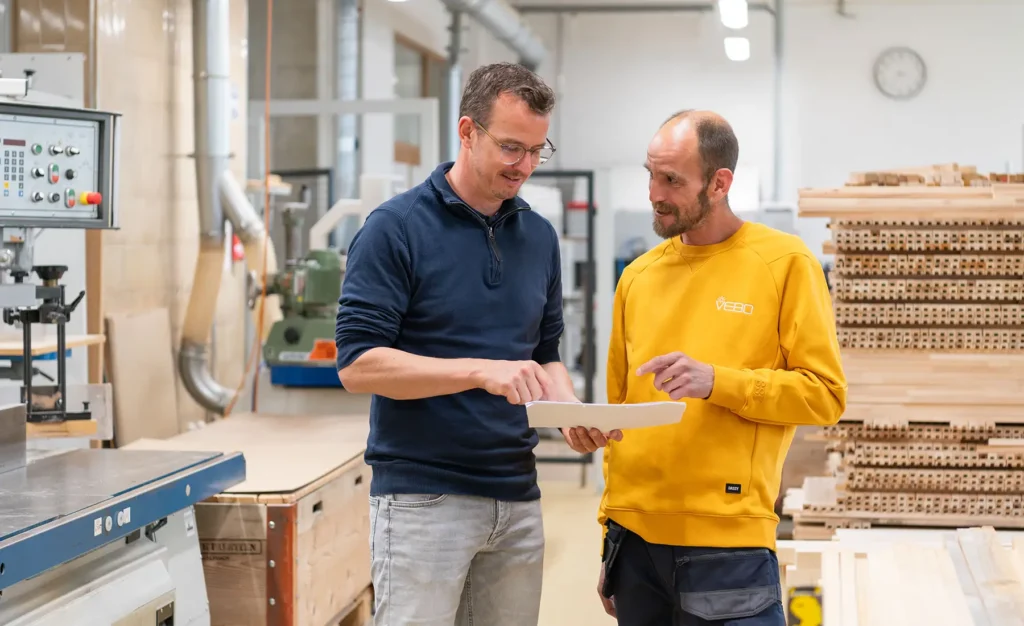
In Switzerland, this collaboration has become a reality. IKEA is partnering with two experienced social enterprises, BAND and VEBO, to provide services to customers with an IKEA kitchen.
Silja Läng, Apprentice Design Engineer, was involved in the pitch that led to BAND Genossenschaft being selected to provide services as part of the programme.
A new way of working together
This isn’t just a side project. It’s part of IKEA’s core supply chain.
Orders go through IKEA’s regular systems, just like with any other service provider. When a customer needs a repair, the request is processed directly. Spare parts are delivered to the customer’s home, and the social enterprise partner handles the service visit.
Each visit combines professional skills with inclusion. A licensed supervisor works alongside someone who might otherwise have trouble finding a job. Together, they deliver high-quality service while opening up new pathways into skilled work.
“This pilot in Switzerland shows something we’ve long believed: that social enterprises are not a compromise; they are a real supply chain option. The SEP Programme exists to unlock exactly this kind of partnership, and we intend to replicate it across markets. Inclusive employment and business performance are not in tension. This proves they can go hand in hand,” said Raphael Guillard, Global Supply Chain Partnerships Leader, Ingka Group.
Creating opportunities through everyday work
For BAND and VEBO, inclusion is already central to their work. Both organisations employ people with disabilities or those who need extra support. This partnership gives them a chance to make an even bigger impact.
Through the programme and pilot, they’ll receive ongoing support to grow their operations, create more jobs and build greater stability. The pilot is set up to learn along the way, testing and improving how things work based on real customer feedback.
Thomas Wuillemin, Corporate Development & Project Manager at BAND Genossenschaft: “This partnership shows that inclusion and business excellence go hand in hand: when people with and without support needs collaborate as a matter of course, it creates quality, reliability, and measurable social impact.”
Stephan Bitterli, Head of the Carpentry Department at VEBO Genossenschaft: “We are delighted about this exciting new partnership, which opens significant growth potential for both parties whilst also enabling us to enter a promising and sustainable new business sector.”
Collaboration at the core
The REsourcing programme brings together IKEA Social Entrepreneurship, Ingka Group, and Yunus Social Innovation to connect local entrepreneurs with the needs of IKEA markets.
Through funding, mentorship, and hands-on teamwork, the programme supports social enterprises in growing their businesses and supports IKEA teams in finding new ways to work.
“They’re very fast at setting up new solutions, and they are very willing to test and try. They brought ideas we hadn’t considered: new repair services, new business models. It was a good reminder to stay open, and that is exactly the collaborative energy we want to build on,” said Annik Müller, Sustainability Business Partner, IKEA Switzerland.
Part of a global ambition
Switzerland is the first IKEA market to bring social enterprises directly into its supply chain through SEP, but it won’t be the last.
The aim is to expand this approach to more markets, creating long-term partnerships that bring together business value and social impact. Ingka Group, the largest IKEA retailer, wants to have at least one contracted social enterprise in each of its 31 markets. After Switzerland, Belgium, Italy, Poland, Spain, and South Korea are expected to join. More than 100 Ingka Group employees in over a dozen markets have already taken part in the programme, building the skills needed to find, evaluate, and bring social enterprises into the supply chain as long-term partners.
By working with social entrepreneurs, we hope to build more inclusive communities and meet real customer needs, showing that business can help drive positive change.
Find out more about the REsourcing partnership here: https://ysi.global/cases/ikea-resourcing/